Basilica di Santa Maria della Salute: Venice's Iconic Marvel
Discovering Basilica di Santa Maria della Salute: Venice's Architectural Gem


History and Architectural Significance
In 1630, a devastating plague swept through Venice, killing nearly a third of the population — around 46,000 people in little more than a year. The Senate of the Republic made a solemn public vow to the Virgin Mary: if the contagion stopped, Venice would build in her honor a church of extraordinary beauty.
The plague ended in 1631. And Venice kept its promise.
The commission went to Baldassare Longhena, then just thirty-two years old, who won with a bold and unprecedented design: an octagonal floor plan — unusual for a Venetian church — inspired, according to Longhena himself, by the shape of a crown, as an offering to the Queen of Heaven. Construction began in 1631 and lasted more than fifty years: the Basilica was consecrated in 1687, a year after Longhena's death, before he could see his masterpiece completed.
The engineering challenge was immense. The Punta della Dogana, where the church stands, is built on waterlogged, unstable ground. To support the weight of the building and its massive dome, more than one million one hundred thousand oak and fir wooden piles were driven into the lagoon floor — an invisible foundation of extraordinary ambition that continues to hold the structure today, nearly four centuries later.
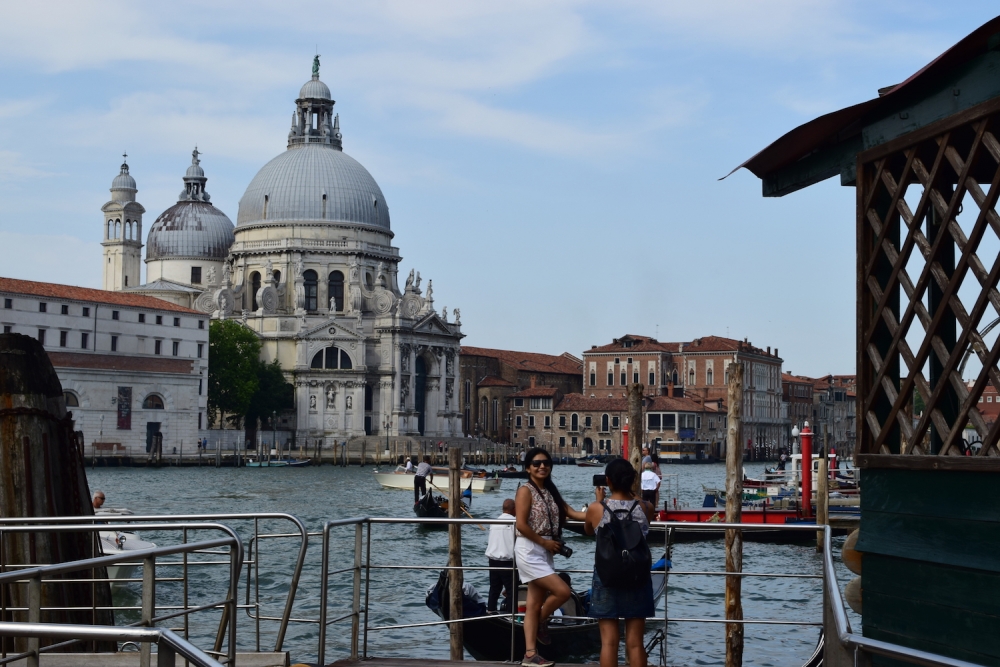
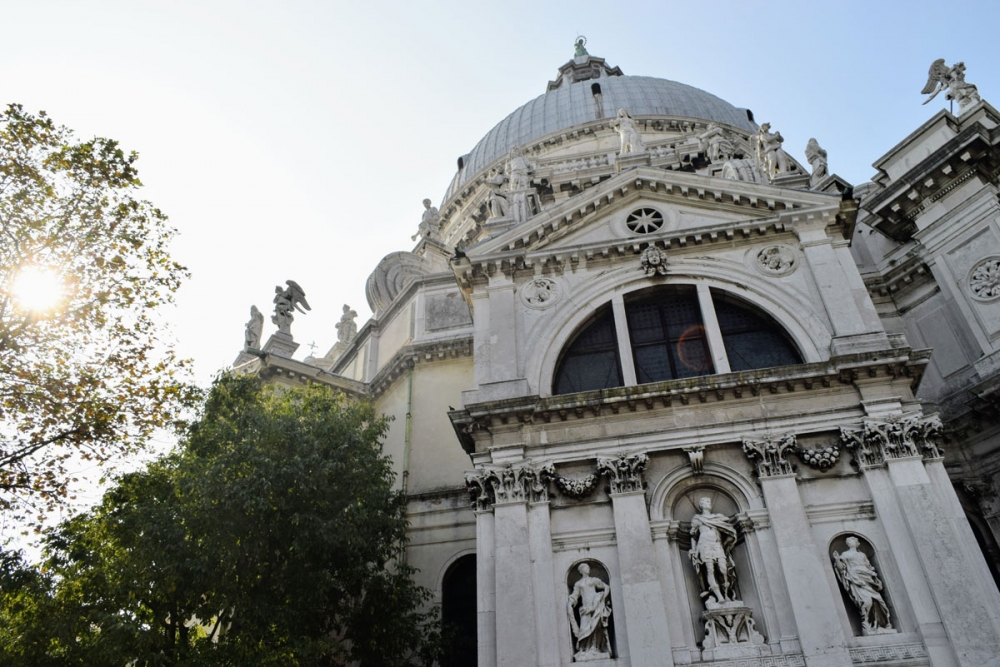
The result is one of the most dramatic Baroque buildings in Europe: the great white dome, flanked by a smaller dome and a bell tower, has become the defining symbol of Venice — painted by Canaletto, Turner, and Monet, and captured by every traveler on the Grand Tour.
Masterpieces Inside
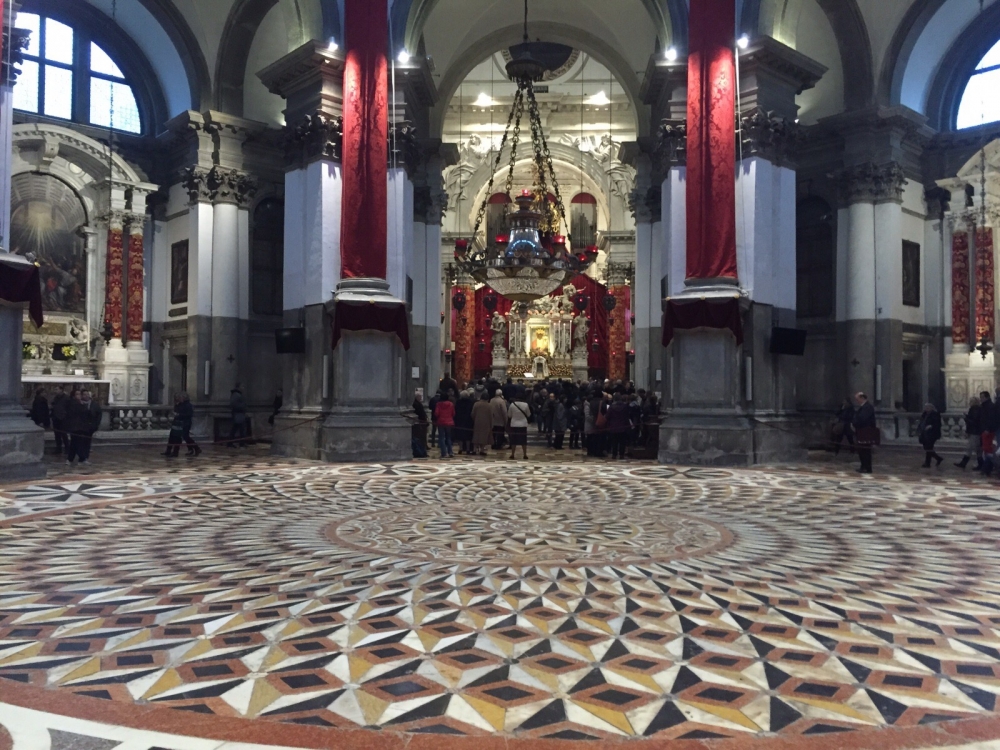
The interior of the Basilica is restrained and elegant, with white marble walls and light pouring through the high windows of the dome. But it is the Sacristy — accessible for a small fee — where the real artistic treasures of the Salute are kept.
The absolute highlight is "The Wedding at Cana" by Jacopo Tintoretto (1561), a large-scale canvas depicting the miracle of Jesus at Cana with the chromatic brilliance and compositional power that define the great Venetian master. The work was originally commissioned for the refectory of the church of Santo Stefano and transferred here in the seventeenth century.
But it is Titian who dominates the Sacristy with an extraordinary cycle of works:
- "Saint Mark Enthroned with Saints Cosmas, Damian, Roch, and Sebastian" (1511–1512), painted during the great plague of 1510 as a votive offering — a history that symbolically prefigures the basilica's own story
- "The Descent of the Holy Spirit" (Pentecost), with its dramatic rendering of divine light
- "Cain and Abel", "The Sacrifice of Abel", and "David and Goliath" — three ceiling canvases painted by Titian around 1540–1549, among his most powerful and least-known works
In the main apse, above the high altar, stands the statue of the Madonna della Salute — a twelfth-century sculpture that arrived from Constantinople, venerated by Venetians for centuries as the protector of their city.
The Feast of the Madonna della Salute
Every year on November 21st, Venice changes. For one day, the entire city makes its way to the Salute: a floating votive bridge — anchored on wooden piles and stretching from the bank of Santa Maria del Giglio to the bank of San Gregorio — allows Venetians to cross on foot to the Basilica and pay their respects to the Madonna.
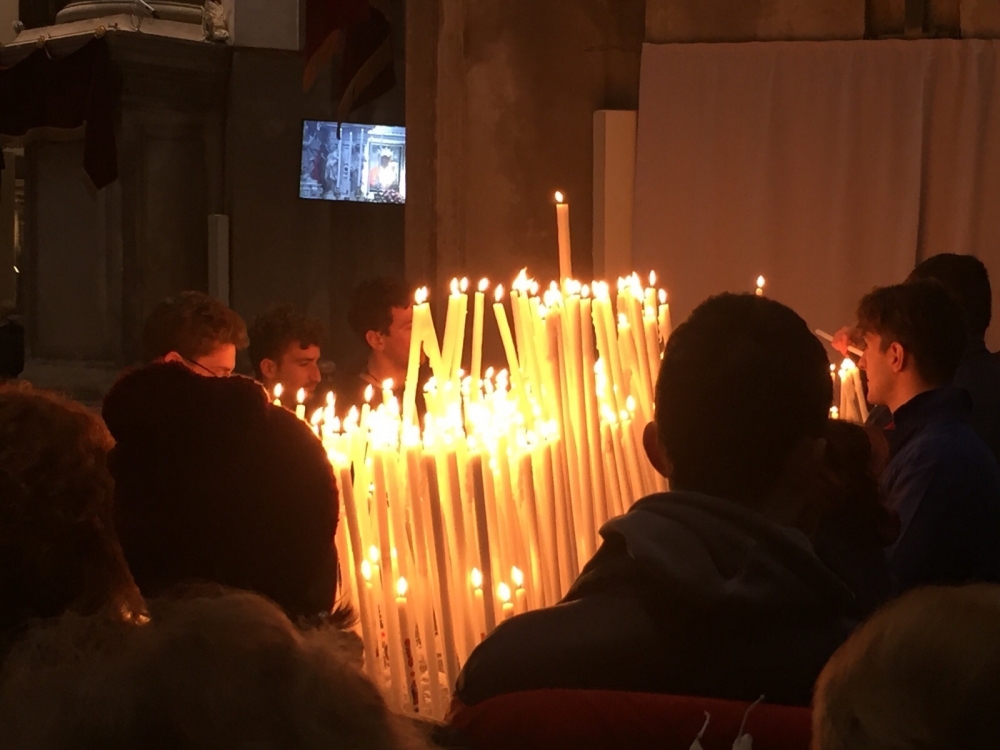
The Feast of the Madonna della Salute is one of the oldest and most deeply felt celebrations in the city, established by the Republic of Venice in 1631 to mark the end of the plague. This is not a tourist event — it is a Venetian tradition, genuine and well-attended, with votive candles burning inside the Basilica and street stalls selling castradina, the traditional smoked mutton dish eaten on this day and no other.
For anyone visiting Venice in November, witnessing this procession is one of those encounters with the real city that no guidebook can quite prepare you for.
→ Find out more about the Feast of the Madonna della Salute
When to Visit
To experience the full serenity and grandeur of La Salute, consider visiting on a weekday, preferably in the morning, when light filters beautifully through the dome and crowds are smaller. If you plan to visit the Sacristy — where Titian's and Tintoretto's works are held — check the specific hours in advance, as they vary by day of the week.
Opening Hours
Basilica:
- Summer (April 1 – October 31): daily 9:00 AM–12:00 PM / 3:00–5:30 PM
- Winter (November 1 – March 31): daily 9:30 AM–12:30 PM / 3:00–5:30 PM
Sacristy (admission fee applies): hours vary by day of the week — check the official website basilicasalutevenezia.it before your visit.
Admission:
- Basilica: free entry
- Sacristy: €6.00 adults / €4.00 reduced (children aged 7–14) / free for children under 7
Hours may vary on religious holidays and on the Feast of the Madonna della Salute (November 21st).
How to Get There:The most romantic way to reach the basilica is undoubtedly by vaporetto. Take Line 1 and alight at the 'Salute' stop. If you prefer a picturesque walk, it's just a short stroll away from the Peggy Guggenheim Collection.
Nearby Attractions:
After immersing yourself in the spiritual aura of La Salute, you can explore:- Punta della Dogana: An art museum housed in a former customs house, exhibiting contemporary artworks from the Pinault Collection.
- Peggy Guggenheim Collection: A modern art museum hosting an impressive array of 20th-century artworks.
- Accademia Bridge: Offering one of the most panoramic views of the Grand Canal, it's an ideal spot for photo enthusiasts.
In conclusion, a visit to the Basilica di Santa Maria della Salute offers a harmonious blend of history, art, and spirituality. As you stand before this grand edifice, with the lapping waters of the Grand Canal at its feet, you're reminded of the enduring spirit and beauty of Venice.
Video: Venice A beautiful Dream
If you like explore Venice in depth


- Walking Tour of Venice
- Doge's Palace Guided Tour
- The Ducal Venice Tour
- The Absolute Venice
- The Inside Venice Tour
- The Byzantine Venice and Gondola ride
- Morning Walking tour & Gondola Ride
- Basilica Guided Tour & Gondola ride
- The Islands Tour
- A Classic Gondola Ride Tour
- Gondola Serenade Tour
- Wine Tasting & Dinner
- The Byzantine Venice
- Classic Venice Private Tour
- Private Walking Tour
- Gondola and Walking Private Tour
- Gondola Serenade Private Tour
- Gondola and Dinner Private Tour
- The Legends of Venice
- Private Grand Canal Boat Tour
- Private Islands Tour
- Wine Tasting & Secrets of the Venetian Lagoon
- Private Luxury Cruise on the Grand Canal with Aperitif
- Wine & Cicchetti – Discover Venetian Food Traditions