Ca’ Rezzonico Venice – Museum of 18th-Century Venice on the Grand Canal
Tiepolo, Canaletto, Pietro Longhi

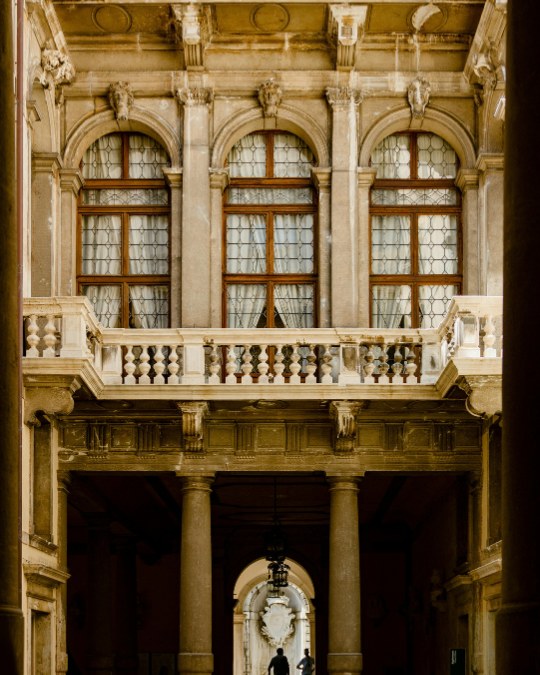
Ca’ Rezzonico is one of the most spectacular and unforgettable palaces on the Grand Canal. With its marble façade and majestic presence in the heart of Dorsoduro, it is home to the Museum of 18th-Century Venice — a true journey into the golden age of Venetian art and culture. This is not a museum “about” Venice but a museum “inside” Venice, because here you do not simply observe the 18th century: you enter it room by room, among stuccoes, frescoed ceilings, salons, aristocratic furniture, chandeliers, pastels, musical instruments, and authentic decorative objects.
The works of the great masters of the Venetian Settecento — Tiepolo, Rosalba Carriera, Pietro Longhi, Francesco Guardi, Canaletto — live within the kind of architectural context they were originally created for. Ca’ Rezzonico is not a neutral gallery: it is an immersive environment. Climbing its grand staircase feels like entering an aristocratic home during the century when Venice was the aesthetic capital of Europe.
CA' REZZONICO - MUSEUM
.jpg)
The Palace and its History
The construction of Ca’ Rezzonico began in the mid-17th century, designed by Baldassare Longhena, architect of the Basilica della Salute. The palace was completed only in the 18th century when it passed into the hands of the powerful Rezzonico family — from whom it takes its name. It was in this very palace that the future Pope Clement XIII grew up.
In 1935 Ca’ Rezzonico became a civic museum, and over the decades the City of Venice reconstructed authentic 18th-century interiors thanks to important acquisitions and donations.
The most noteworthy include the Egidio Martini and Ferruccio Mestrovich collections, which enriched the museum with more than three hundred works — including paintings by Cima da Conegliano, Alvise Vivarini, Bonifacio de’ Pitati, Tintoretto, the Ricci family, and again Tiepolo, Longhi, Rosalba Carriera and the Guardi. A treasure within a treasure.
What to See Inside
- stuccoes and painted ceilings by Giambattista and Giandomenico Tiepolo
- pastels by Rosalba Carriera, the most celebrated portrait artist of her time
- scenes of everyday Venetian life by Pietro Longhi — humorous and sociological
- views of Venice by Canaletto and Francesco Guardi
- furniture, chandeliers, instruments, aristocratic décor recreating original interiors
- a reconstructed 18th-century pharmacy on the upper floors
The most striking element is the continuity: room after room, you don’t feel like you’re in a museum — you feel like a guest arriving at a noble home in the age of the Serenissima.
Who is it for?
Ca’ Rezzonico is ideal for visitors who:
- love Venetian art and want to see it in its original architectural context
- prefer refined, less hectic museums
- travel with adults or teens with a passion for culture
- want to understand aristocratic Venice “before the fall of the Republic”
It is also perfect for a slow cultural afternoon after a walk along the Zattere.
How to Get There
The nearest vaporetto stop is Ca’ Rezzonico, served by line 1.
Other useful stops:
- San Tomà – Line 1
- Accademia – Line 1 / Line 2
Hours & Tickets
Hours: open daily except Tuesday
From 01 April to 31 October: 10:00 AM – 6:00 PM (last entry 5:00 PM)
From 01 November to 31 March:10:00 AM – 5:00 PM (last entry 4:00 PM)
Tickets:
Adult: €15.00
Reduced: €7.50
Residents and children 0–5: free
What to See Nearby (authentic local Venice)
- Zattere — bright lagoon promenade, favorite of Venetians
- San Trovaso Squero — one of the few boatyards still building gondolas
- Campo San Barnaba — photogenic and lively
- Campo Santa Margherita — neighborhood heart and student life
- Basilica della Salute — 10 minutes’ walk, extraordinary panorama
- Gallerie dell’Accademia — masterpieces of Venetian painting
- Punta della Dogana — contemporary art in a stunning setting
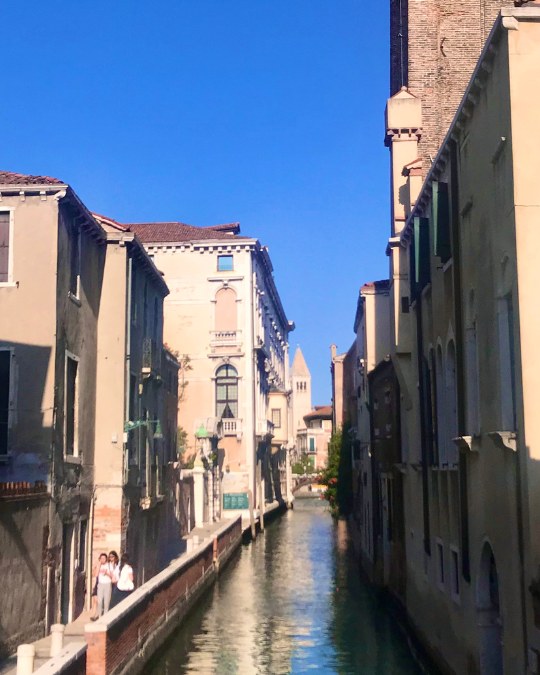
A beautiful way to reach the museum is to cross the Grand Canal by vaporetto and then wander freely through the campos and calli of Dorsoduro.
Conclusion
Ca’ Rezzonico is not just a museum — it is a time capsule. Here, the 18th century is not something to “observe” but something to inhabit. Visiting Ca’ Rezzonico means entering the imaginary and the visual culture of the century when Venice was Europe’s capital of elegance and style.
And when you step back outside, looking at the Grand Canal, you understand why the Republic called that age “the century of grace.”
If you like explore Venice in depth


- Walking Tour of Venice
- Doge's Palace Guided Tour
- The Ducal Venice Tour
- The Absolute Venice
- The Inside Venice Tour
- The Byzantine Venice and Gondola ride
- Morning Walking tour & Gondola Ride
- Basilica Guided Tour & Gondola ride
- The Islands Tour
- A Classic Gondola Ride Tour
- Gondola Serenade Tour
- Wine Tasting & Dinner
- The Byzantine Venice
- Classic Venice Private Tour
- Private Walking Tour
- Gondola and Walking Private Tour
- Gondola Serenade Private Tour
- Gondola and Dinner Private Tour
- The Legends of Venice
- Private Grand Canal Boat Tour
- Private Islands Tour
- Wine Tasting & Secrets of the Venetian Lagoon
- Private Luxury Cruise on the Grand Canal with Aperitif
- Wine & Cicchetti – Discover Venetian Food Traditions