Palazzo Fortuny – The House-Atelier of Mariano Fortuny
Fortuny fashion Venice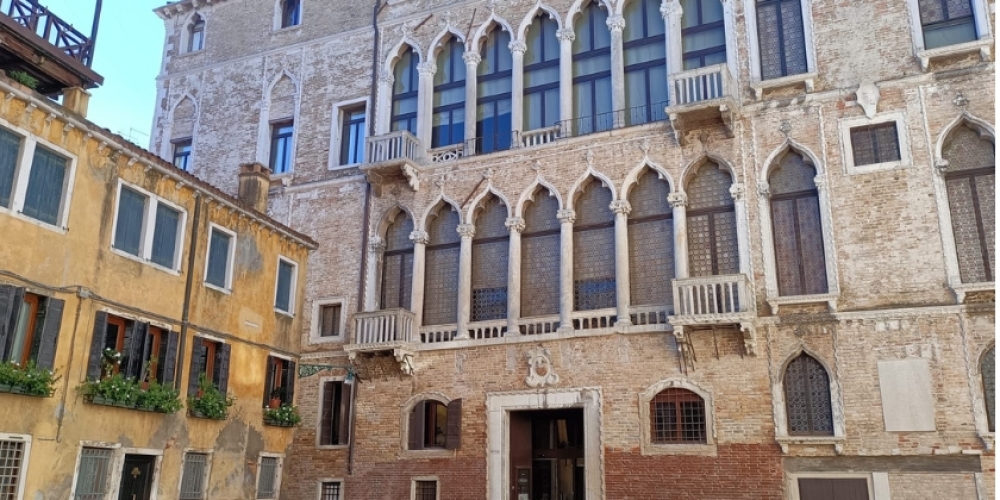
.jpg)

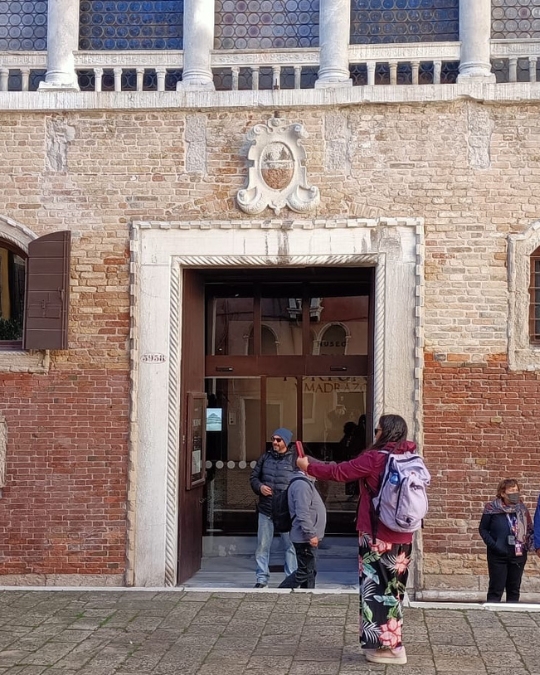
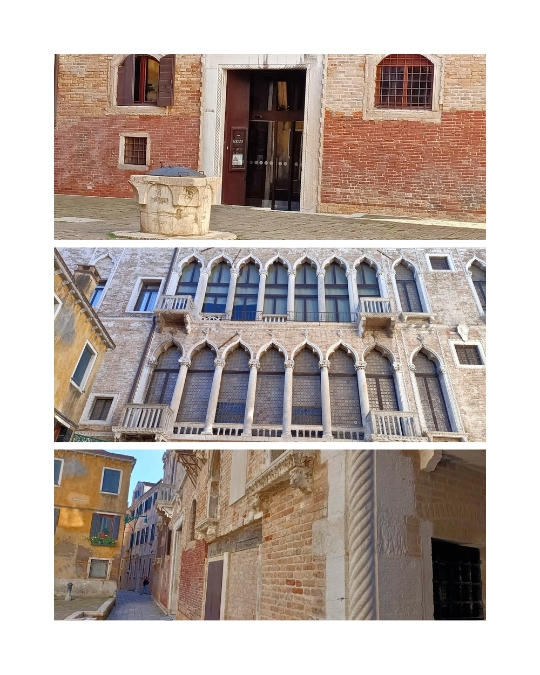
In the quiet elegance of Campo San Beneto, just steps from La Fenice Opera House, stands the Palazzo Pesaro degli Orfei, better known as Palazzo Fortuny. Here — among dimmed light, high windows, velvet-covered walls and rooms that seem to suspend time — Mariano Fortuny y Madrazo turned a large late-Gothic palace into a total creative laboratory: painting, scenography, photography, fashion, textiles, light. This is the spirit of the Fortuny Museum: not a traditional museum, but a house-atelier where invention becomes atmosphere.
The visit is a journey inside Fortuny’s imagination: theatrical models and stage design, textile printing, the legendary “sculptural garments” such as the famous Delphos, oriental-inspired interiors, a creative library, rooms dedicated to Wagnerian cycles, and the textile atelier shared with Henriette Nigrin. All displayed inside the same palace Fortuny loved, restored and reinvented — opening volumes, recovering proportions, and creating a perfectly balanced aesthetic machine.
The Palazzo: from late Gothic to the atelier of a visionary
The palace — built for Benedetto Pesaro — dates back to the late 15th century (1460–1480 approx.). Its imposing volume, the triple-light windows of the two noble floors, and the exceptional depth of its rooms (over 43 meters) make it one of the largest late Gothic–Renaissance private residences in Venice. Over the centuries it housed typographies and musical academies (including the Accademia degli Orfei from 1786) before a slow decline in the 19th century. It was Mariano Fortuny who brought it back to life: he arrived here in 1898, gradually acquired the palace (1899, 1900, 1906), and transformed it into a living workshop, freeing rooms and reconstructing volumes to create an atelier-house.
After his death (1949), his wife Henriette Nigrin donated the palace to the City of Venice in 1956 so that it would remain a “permanent center of culture.” The museum opened to the public in 1975.
PALAZZO FORTUNY - PHOTO GALLERY
.jpg)
Mariano Fortuny (1871–1949): total artist
Born in Granada into a family of painters and collectors, Fortuny grew up in a cosmopolitan environment between Spain, Paris and Venice. Painter, scenographer, inventor of lighting devices, photographer and — above all — designer of textiles and avant-garde garments, he experimented endlessly with light (also in painting and photography) and with the relationship between surface, color and movement.
At the heart of Fortuny’s poetics lies the idea of an atelier-world in which Venetian tradition (Titian, Tintoretto, Veronese) meets Oriental inspirations, Renaissance refinement and technological modernity. Textiles and fashion were the point where art and craft become the same thing: wooden printing matrices, color variations, silk velvets printed with patented procedures, garments that do not simply “dress” — they stage light.
Collections and Highlights
- The House Museum: historic rooms, furniture, the “winter garden” with allegories and floral motifs painted by Fortuny
- Ateliers: painting studio, photography, stage design, and the textile workshop shared with Henriette
- Fashion & textiles: the Knossos stole (1907), velvet prints, silk garments, the iconic Delphos dress (1909–1910)
- Wagnerian cycles: paintings inspired by Wagner’s operas, key to Fortuny’s research on light and stage space
- Collector’s cabinet: weapons, carpets, ceramics, antiquities — a living archive for artistic inspiration
Temporary exhibitions create an ongoing dialogue with this history. The current show is ANTONIO BEATO. Return to Venice (October 15, 2025 – January 12, 2026), dedicated to the renowned photographer active in Egypt between the 19th and early 20th century.
Who is it for
- Art & design lovers
- Fashion & textile enthusiasts
- Curious about Venice beyond the Renaissance
- Slow travelers who enjoy intimate museums
Practical visit tips
- Average visit: 60–90 min (add 30–40 min if visiting special exhibitions)
- Best time: opening hours or late afternoon
- Audio: MUVE App audioguide available on smartphone
- Extra: dog-sitting service available upon request
- Save: consider the combo ticket “Modern & Contemporary Museums” (Ca’ Pesaro + Fortuny)
How to get there
Address: San Marco 3958, 30124 Venice — Campo San Beneto.
- Vaporetto: Line 1, Stop Sant’Angelo (from Piazzale Roma / Santa Lucia / Lido)
- Walk: 6–8 min from La Fenice; 10–12 min from Rialto; 12–15 min from Accademia
Hours & Tickets
Hours
April 1 – October 31: 10:00 – 18:00 (last entry 17:00)
November 1 – March 31: 10:00 – 17:00 (last entry 16:00)
Closed on Tuesdays.
Tickets
Adult: €10.00
Reduced: €7.50 (6–14 years; students 15–25; over 65; MiC; etc.)
School groups: €4.00 (Sept 1 – March 15, teachers included)
Free: residents, children 0–5, visitors with disabilities + companion, licensed guides, MUVE partners, etc.
Combo “Modern & Contemporary Museums” (Ca’ Pesaro + Fortuny): Adult €15.00 — Reduced €12.00 (valid 3 months, one entry per museum)
VENICE - MUSEO FORTUNY
What to see nearby
- La Fenice Opera House
- Campo Santo Stefano and Accademia Bridge
- Palazzo Grassi (Pinault Collection)
- Punta della Dogana
- Scala Contarini del Bovolo
Why visit the Fortuny Museum
Because it is one of the few places where Venice tells its 20th century without losing its soul. A historic palace inhabited by an artist who reinterpreted tradition into modern invention. Here, light is a material, a textile becomes painting, a stage becomes architecture.
A museum to experience, not just to “visit”.
- Walking Tour of Venice
- Doge's Palace Guided Tour
- The Ducal Venice Tour
- The Absolute Venice
- The Inside Venice Tour
- The Byzantine Venice and Gondola ride
- Morning Walking tour & Gondola Ride
- Basilica Guided Tour & Gondola ride
- The Islands Tour
- A Classic Gondola Ride Tour
- Gondola Serenade Tour
- Wine Tasting & Dinner
- The Byzantine Venice
- Classic Venice Private Tour
- Private Walking Tour
- Gondola and Walking Private Tour
- Gondola Serenade Private Tour
- Gondola and Dinner Private Tour
- The Legends of Venice
- Private Grand Canal Boat Tour
- Private Islands Tour
- Wine Tasting & Secrets of the Venetian Lagoon
- Private Luxury Cruise on the Grand Canal with Aperitif
- Wine & Cicchetti – Discover Venetian Food Traditions