Naval History Museum of Venice: Complete Visitor Guide
Riva S. Biasio 2148 - Castello


Why Visit the Naval History Museum
Located in the Castello district, just a short walk from the Arsenale and away from the busiest tourist routes, the Naval History Museum of Venice is one of the city’s most authentic and fascinating museums. It tells the deep connection between Venice and the sea, exploring history, technology, and power while offering a different perspective from the grand artistic landmarks of the city center.
Visiting this museum means stepping into the heart of the maritime power of the Venetian Republic, discovering how Venice dominated Mediterranean trade for centuries and built one of the most efficient naval fleets in history. Here, among ship models, navigation instruments, weapons, and historical artifacts, the past takes shape in a concrete and engaging way.
Unlike many Venetian museums, often crowded and focused on art and architecture, the Naval Museum offers a quieter, more immersive and narrative experience. It is the ideal place for those who want to truly understand how Venice worked, not only as a city, but as an economic and military power.
Closely connected to a visit to the Arsenale, this museum is an essential stop for anyone looking to explore the more strategic and lesser-known side of Venice.
The History of the Naval History Museum
The Naval History Museum of Venice was created to preserve and tell the story of the city’s maritime tradition, closely linked to the history of the Venetian Republic and the central role of its fleet. Today, the museum is managed by the Italian Navy, which oversees its preservation and development.
The main building is part of a historic complex dating back to the 15th century, originally used for activities connected to the Arsenale and the naval operations of the Republic. Over time, these spaces were adapted into a museum while maintaining a strong connection to their original purpose.
Since its opening, the museum has been dedicated to collecting and documenting everything related to navigation, shipbuilding, and Venetian maritime life. Its collection has expanded over time through military contributions, donations, and historical recoveries, becoming one of the most important testimonies of Italy’s naval history.
Today, the museum extends across multiple levels and also includes an external section within the Arsenale, where full-scale historic vessels are displayed. This direct connection to its original context makes the visit even more meaningful and immersive.
Venice and the Power of the Sea
To truly understand the importance of the Naval History Museum, it is essential to remember that Venice was for centuries one of the greatest maritime powers in the world. The Serenissima Republic built its wealth and influence on controlling trade routes, developing a highly organized, efficient, and technologically advanced fleet.
The core of this system was the Arsenale of Venice, a unique industrial complex capable of building and outfitting ships at remarkable speed. It was here that the military and commercial strength of the Republic was created, allowing Venice to defend its territories and dominate trade between East and West.
Venetian ships sailed across the Mediterranean carrying goods, people, and ideas, helping transform Venice into one of the most cosmopolitan cities of its time. Maritime superiority was not only a military advantage, but also an economic and political one.
The Naval History Museum tells precisely this story: not just the ships themselves, but the entire system that made them possible. A system built on innovation, organization, and strategic vision.
Visiting the museum therefore means understanding Venice from a different perspective: not only as a city of art, but as a maritime, industrial, and commercial power.
The Collections of the Naval History Museum
The Naval History Museum of Venice houses one of the most extensive collections dedicated to the maritime history of the Mediterranean. The exhibition unfolds across multiple levels, guiding visitors through centuries of navigation, shipbuilding technology, and life at sea.
The variety of objects on display is what makes this museum particularly engaging: it is not just about observing models or instruments, but about understanding how the Venetian maritime system actually functioned. Each room tells a different part of this story, offering a complete and in-depth perspective.
The main sections of the museum include:
- models of historic Venetian ships;
- navigation instruments and cartography;
- weapons and military equipment;
- artifacts related to life on board;
- documents and records from the Venetian Republic.
The museum thus tells not only the evolution of ships, but also the social, economic, and military context that made Venice a maritime power.
Ship Models: The Heart of the Collection
One of the most fascinating elements of the museum is its collection of ship models, true masterpieces of precision and craftsmanship. These replicas allow visitors to closely observe the structure of Venetian vessels and better understand the construction techniques and engineering solutions developed over the centuries.
Among the most interesting models are:
- war galleys, symbols of Venetian military power;
- merchant ships used for international trade;
- specialized vessels for transport and diplomatic missions;
- models of ships used in major naval battles.
These models are not just display objects, but essential educational tools that help explain how the Venetian fleet functioned and the advanced level of maritime technology achieved by the Republic.
The Bucintoro: Symbol of Venetian Power
Among the most iconic vessels in Venetian tradition is the Bucintoro, the ceremonial barge of the Doge. Used during the famous ritual of the Marriage of the Sea, it symbolized Venice’s deep connection with the sea.
The Bucintoro was not a warship, but a richly decorated ceremonial vessel used for official events and celebrations. Inside the museum, models and reconstructions help visitors understand its symbolic and political importance.
This vessel perfectly represents Venetian identity: a city that not only dominated the sea, but also celebrated its significance through rituals and traditions.
Navigation Instruments and Life on Board
In addition to ships, the museum dedicates significant space to navigation instruments and the daily life of sailors. Maps, compasses, astrolabes, and nautical tools reveal how Venetian navigators were able to orient themselves and travel long distances.
These objects highlight the challenges of navigation in times when technology was limited and experience played a crucial role.
Alongside technical tools, the museum also displays items related to life on board:
- everyday equipment used by sailors;
- uniforms and clothing;
- tools for work and defense;
- elements of military organization and life at sea.
This section adds a human dimension to the visit, allowing visitors to imagine not only the ships, but also the people who lived and worked on them.
Weapons, Battles, and Military Power
Another important part of the collection focuses on the military aspect of the Venetian Republic. Weapons, cannons, armor, and war equipment illustrate the strategic role of the Venetian fleet in warfare and defense operations.
The Serenissima was not only a commercial power, but also a highly organized military force capable of defending its interests and engaging in major naval conflicts.
Through these exhibits, the museum shows how control of the sea was not only an economic issue, but also a political and military necessity, essential for the survival and expansion of the Republic.
The Ships Pavilion at the Arsenale
One of the most impressive parts of the visit is located outside the main museum, at the Ships Pavilion within the Arsenale area. Here, visitors can see real historic vessels at full scale.
This section offers a completely different experience compared to the indoor galleries: the actual size of the ships allows visitors to fully appreciate the complexity of naval construction and the visual impact of the Venetian fleet.
Visiting the Ships Pavilion completes the museum experience, transforming it from a theoretical journey into a truly immersive one. It is where history becomes tangible, allowing visitors to see firsthand what made Venice one of the greatest maritime powers in history.
The Exhibition Route: What to See Floor by Floor
The Naval History Museum of Venice is arranged over several levels, offering an exhibition route that is extensive yet well organized. The visit unfolds progressively, guiding visitors through different periods and aspects of Venetian maritime history.
Each floor focuses on a specific theme, allowing visitors to explore both naval technology and the human and historical dimensions of navigation.
In general, the route includes:
- floors dedicated to ship models and shipbuilding techniques;
- sections on navigation instruments and cartography;
- spaces devoted to military history and the Venetian fleet;
- areas illustrating life on board and maritime organization.
The layout of the galleries makes the visit smooth and intuitive. There is no need to follow a rigid order; instead, visitors can move naturally through the museum, guided by curiosity and by the exhibits that attract their attention the most.
How to Visit the Naval History Museum
The museum can be visited independently or explored in greater depth. The choice depends on the time available and the level of interest in naval history.
An independent visit is perfect for those who want to discover the main highlights and gain a general overview. The information provided throughout the galleries is enough to understand the context and follow the exhibition route.
Those who wish to go deeper can devote more time to the museum, focusing on the details, the models, and the more technical sections. In this case, the museum becomes a more immersive and complete experience.
An excellent option is to combine the indoor visit with the Ships Pavilion at the Arsenale, in order to gain an even more concrete and complete understanding of Venetian maritime history.
How Much Time You Need for the Visit
The length of the visit can vary depending on interest and personal pace.
- 1 hour – a quick visit, ideal for seeing the main highlights;
- 1.5 to 2 hours – a full museum visit;
- 2 to 3 hours – a more in-depth visit including the Ships Pavilion.
The museum is generally not overcrowded, which makes it easy to manage your time flexibly and enjoy the visit at a relaxed pace.
Who This Visit Is Recommended For
The Naval History Museum is an ideal stop for those who want to go beyond the more touristy side of Venice and discover a fundamental part of the city’s identity.
It is especially recommended for:
- those interested in history and navigation;
- visitors who want to understand the role of the Venetian Republic in the Mediterranean world;
- families with curious children, thanks to the presence of models and tangible objects;
- travelers looking for a museum that is less crowded and more authentic;
- those who want to complement a visit to the Arsenale with historical context.
It may be less suited to visitors seeking a purely artistic or visual experience, since its focus is more historical and technical.
What to See Near the Naval Museum
The museum is located in a quieter part of Venice, yet one that is rich in interesting sites, within the Castello district, one of the most authentic areas of the city.
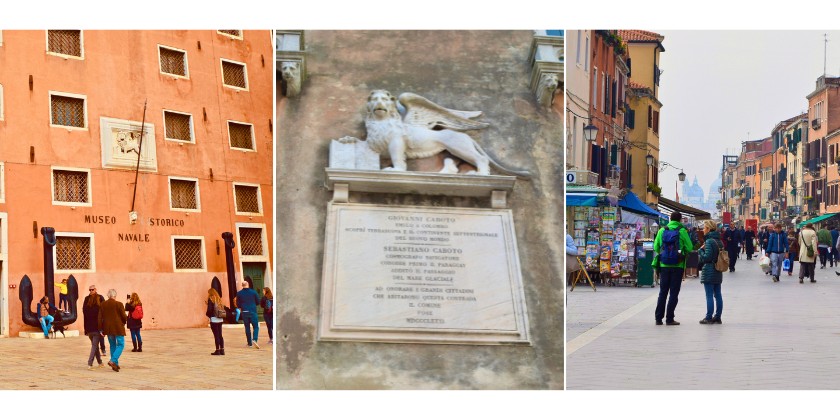
Among the best places to combine with your visit are:
- the Arsenale of Venice, the historic heart of Venetian naval power;
- the Biennale Gardens, especially during exhibition periods;
- San Pietro di Castello, one of the city’s oldest churches;
- the quieter streets and campi of Castello, perfect for a more authentic walk.
This area allows visitors to experience a more genuine and less crowded Venice, ideal for those who want to step away from the most heavily traveled routes.
Useful Tips for Your Visit
To make the most of the Naval History Museum, it helps to follow a few simple suggestions:
- combine the museum with the Ships Pavilion for a fuller experience;
- visit during the middle of the day to avoid possible partial closures;
- wear comfortable shoes, as the exhibition is spread over several floors;
- consider including it on the same day as a visit to the Arsenale;
- take your time with the details: this is a museum best appreciated slowly.
The visit is especially enjoyable precisely because it is less crowded than many other museums in Venice, allowing for a more relaxed and authentic experience.
Visiting the Naval History Museum in 2026: Opening Hours, Tickets, and Updates
A visit to the Naval History Museum of Venice may vary throughout the year depending on the season, management by the Italian Navy, and any special events or activities. For this reason, practical information should always be considered indicative and subject to change.
In 2026, the museum continues to be one of the main institutions dedicated to Venetian maritime history, with access to both the indoor exhibition spaces and, when available, the Ships Pavilion located within the Arsenale.
Opening Hours
The museum is generally open on weekdays and weekends, with hours that may vary between morning and afternoon depending on the time of year.
The Ships Pavilion, located within the Arsenale area, follows specific opening times and may only be accessible during certain hours or days of the week.
Tip: before your visit, always check the official channels for updated opening hours to avoid unexpected changes or closures.
Tickets and Access
Admission to the museum is paid, with prices that may vary depending on:
- ticket type (full price, reduced);
- available discounts or concessions;
- combined access with the Ships Pavilion.
Some visitor categories may benefit from reduced or free admission, according to the current policies of the museum.
For a more complete experience, it is recommended to check the availability of access to the Arsenale section as well.
Exhibitions and Events
In addition to its permanent collection, the Naval History Museum may host temporary exhibitions, events, and initiatives related to maritime culture and naval history.
These activities enrich the visit and offer the opportunity to discover new aspects of Venice’s heritage, even for those who have visited the museum before.
Useful Notes for 2026
To plan your visit in the best possible way in 2026, it is advisable to:
- always check official information before your visit;
- verify the availability of the Ships Pavilion;
- consider the time of year, especially during peak tourist seasons;
- combine your visit with the Arsenale and the Biennale Gardens.
This section is updated every year to ensure accurate and up-to-date information on opening hours, tickets, and access.
Why Visit the Naval History Museum of Venice
The Naval History Museum is not just a museum—it is a place that allows visitors to truly understand the essence of Venice. A city that was not only about art and beauty, but also about maritime power, organization, and innovation.
Through models, instruments, and real vessels, the museum tells a story shaped by the sea, trade, warfare, and strategic vision—one that made Venice one of the most influential cities in the world for centuries.
Visiting the museum means discovering a different side of Venice, more tangible and less widely known, yet essential to understanding its identity.
An authentic experience, away from the crowds, that perfectly completes your exploration of Venice.
Museo Storico Navale di Venezia: Map
- Walking Tour of Venice
- Doge's Palace Guided Tour
- The Ducal Venice Tour
- The Absolute Venice
- The Inside Venice Tour
- The Byzantine Venice and Gondola ride
- Morning Walking tour & Gondola Ride
- Basilica Guided Tour & Gondola ride
- The Islands Tour
- A Classic Gondola Ride Tour
- Gondola Serenade Tour
- Wine Tasting & Dinner
- The Byzantine Venice