
Palazzo Grassi & Punta della Dogana: Complete Guide to Venice’s Contemporary Art Museums
Pinault Collection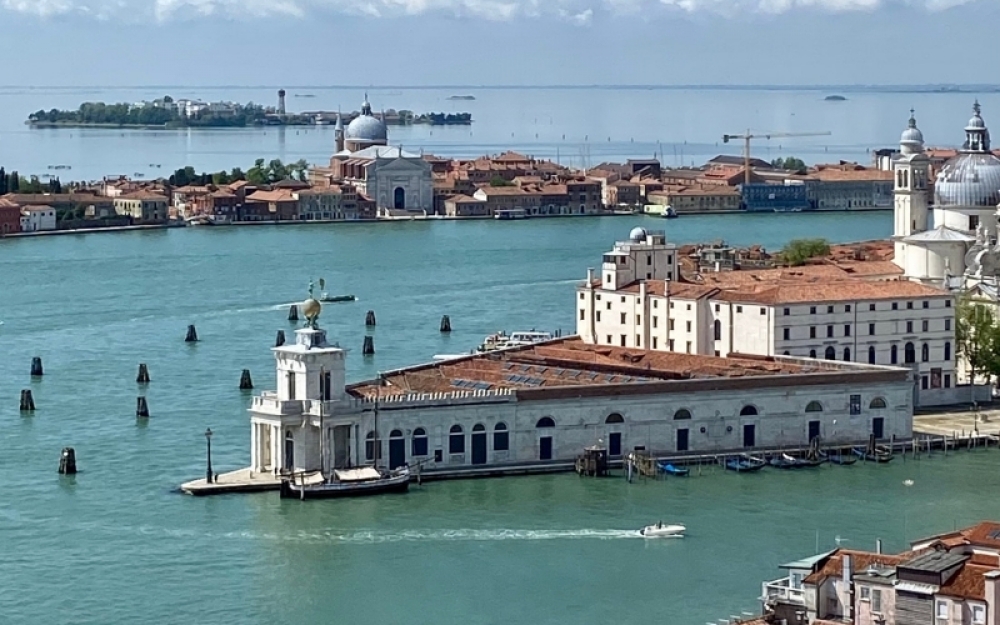

In the heart of Venice, a city renowned for its extraordinary historical, artistic, and architectural heritage, two iconic venues stand out as symbols of its contemporary, dynamic, and internationally driven identity: Palazzo Grassi and Punta della Dogana. These renowned exhibition spaces have played a key role in redefining Venice’s position within the global contemporary art scene.
Defining these venues as simple museums would be limiting. They are true cultural hubs where contemporary art becomes an experience, a form of reflection, and an ongoing dialogue. Their strength lies not only in the carefully curated artworks on display, but above all in their ability to transform the perception of space and time through constantly evolving exhibition paths.
1. Palazzo Grassi and Punta della Dogana: why they are worth visiting
Palazzo Grassi and Punta della Dogana are must-see destinations for anyone interested in contemporary art and looking for an immersive experience in one of the world’s most unique settings: Venice.Their importance extends beyond the artistic sphere, encompassing cultural and architectural significance as well.
1.1 A cultural experience beyond traditional museums
The main difference between these exhibition spaces and traditional museums lies in the temporary and narrative nature of their exhibitions. There is no fixed or chronological route here—each exhibition is conceived as an independent project designed to interact with both the space and the visitor.This dynamic and unconventional approach keeps the experience constantly fresh and engaging. Even those who have visited before can return and discover something entirely new. In this context, art becomes an ongoing process of discovery, acquiring a unique dimension that makes the visit even more compelling and memorable.
2. The history of Palazzo Grassi and Punta della Dogana
To fully understand the value and significance of Palazzo Grassi and Punta della Dogana, it is essential to explore their history, which is deeply connected to the economic and cultural evolution of Venice.2.1 The origins of Palazzo Grassi
Palazzo Grassi is an impressive historic building dating back to the 18th century and represents one of the last grand palaces built along the Grand Canal. Commissioned by the Grassi family, from whom it takes its name, it is a perfect example of Venetian neoclassical architecture.Its strategic location quickly made it a symbol of prestige and influence, attracting nobles and prominent figures from Venice’s cultural and political life. Over the centuries, the building has undergone several transformations, evolving from an aristocratic residence into a contemporary exhibition space.
This transformation reflects the evolution of Venice itself—a city that has never resisted change, but has instead reinvented itself, shifting from a commercial power to an internationally recognized cultural hub.
2.2 The Teatrino at Palazzo Grassi
Next to Palazzo Grassi lies a lesser-known yet highly significant cultural space: the Teatrino at Palazzo Grassi.In 2011, François Pinault launched a redevelopment project for the adjacent area, which had remained abandoned for years. The project was entrusted to Japanese architect Tadao Ando, who had already overseen the restoration of the main exhibition spaces.
This site has a complex history: originally conceived as a romantic garden featuring greenhouses, fountains, and decorative structures commissioned by Baron Simeone De Sina, it was later transformed in the 20th century into an open-air theater and eventually into an indoor venue for events, fashion shows, and performances.
With its contemporary restoration, the Teatrino has gradually become the third pillar of the Pinault Collection in Venice, preserving its original footprint and exterior appearance. The most striking transformation is found inside, where a foyer and auditorium feature clean lines, slanted walls, and geometric openings that reflect Ando’s minimalist architectural language.
Opened in 2013, the Teatrino has quickly established itself as one of Venice’s most dynamic cultural venues, expanding the offering beyond traditional exhibitions.
2.2 The history of Punta della Dogana
Punta della Dogana stands in one of the most scenic locations in Venice, at the point where the Grand Canal meets the San Marco Basin.During the time when Venice was known as the “Serenissima,” this building played a strategic role: it functioned as a customs house, controlling goods entering and leaving the city. It was a key hub in Venice’s economic system and a symbol of its commercial power.
Its distinctive triangular structure, perfectly integrated into the urban landscape, still makes it one of the most recognizable and visually striking buildings in the Venetian lagoon.
2.3 From historic function to cultural revival
With the decline of commercial activities, both buildings went through a long period of gradual abandonment. It was only between the late 20th and early 21st centuries that a major restoration and revitalization process began.Their transformation into contemporary art spaces represents an outstanding example of cultural regeneration: the past is not erased, but reinterpreted through a modern lens. The harmonious contrast between historic architecture and contemporary artworks enhances the visitor experience, making it even more immersive and visually compelling.
3. The Pinault Foundation and the architecture of Tadao Ando
The rebirth of Palazzo Grassi and Punta della Dogana is closely tied to the vision of the Pinault Collection and the work of Japanese architect Tadao Ando, who successfully integrated contemporary elements into historic buildings without compromising their identity.3.1 François Pinault’s cultural vision
The project that brought these iconic Venetian landmarks back to life stems from the vision of entrepreneur and art collector François Pinault, who sought to make one of the world’s most important private collections of contemporary art accessible to the public.His goal was not only to showcase works by internationally renowned artists, but also to establish Venice as a global cultural hub capable of attracting artists, curators, and visitors from around the world.
3.2 The dialogue between contemporary architecture and historic spaces
Another key element of this cultural revival is the contribution of Tadao Ando. His design approach was based on a fundamental principle: respect for the existing structure. In reimagining the exhibition spaces, Ando introduced materials such as concrete and glass, creating a powerful yet balanced dialogue with the original architecture.Natural light also plays a central role in his vision, shaping the perception of space throughout the day and creating a refined balance between historical memory and contemporary expression.
4. The Pinault Collection: artworks and exhibitions in Venice
Beyond the visionary restoration of these exhibition spaces, what truly makes them exceptional is the outstanding quality of the collections on display, featuring some of the most significant works in the international contemporary art scene.4.1 One of the world’s most important contemporary art collections
The Pinault Collection is vast and global in scope, encompassing multiple artistic movements and disciplines. Painting, sculpture, photography, and large-scale installations coexist within an ever-evolving exhibition program.The works explore complex themes such as identity, globalization, memory, and social transformation, offering visitors meaningful opportunities for reflection.
Site-specific installations are particularly striking, as they engage directly with the architecture of the spaces, enhancing and redefining their identity.
4.2 Artists and must-see works
Over the years, Palazzo Grassi and Punta della Dogana have hosted works by some of the most influential names in the international art scene, including Daniel Buren, Yayoi Kusama, Marlene Dumas, Damien Hirst, Maurizio Cattelan, Roni Horn, Sherrie Levine, Irving Penn, Bruce Nauman, Charles Ray, Tatiana Trouvé, Cindy Sherman, and many others.The exhibitions, by nature temporary, are often conceived as immersive experiences in which the viewer becomes an active participant in the narrative. For this reason, it is always recommended to check the exhibition calendar in advance to discover what is on view during your visit.
Beyond exploring the artworks, visitors can enrich their experience by attending workshops, talks, and cultural events hosted at the Teatrino of Palazzo Grassi. These programs are often directly connected to the exhibitions and provide deeper insight into the themes explored by the artists. Checking the official schedule ahead of time is highly recommended.
5. How to visit Palazzo Grassi and Punta della Dogana
Planning your visit to Palazzo Grassi and Punta della Dogana in advance—especially by checking opening hours and ticket options—allows for a more relaxed and well-organized experience, easily combined with other highlights in Venice within the same day.5.1 Opening hours, tickets, and practical information
Opening hours and exhibition access may vary depending on the current shows. In general, both venues are open daily, with a weekly closing day that may change depending on the season.Tickets can be purchased through several options:
- online via the official Pinault Collection website, strongly recommended during peak periods;
- on-site at the ticket offices of Palazzo Grassi and Punta della Dogana;
- through authorized ticketing and travel platforms.
As of 2026, the standard admission ticket is €20. Discounts are available for several categories, including teachers, visitors over 65, affiliated partners, young adults aged 20–26, and families with children under 20.
A combined ticket is often available, granting access to both venues at a reduced rate—an ideal option for visitors planning to explore both locations within the same day or over a short stay.
For particularly popular exhibitions, timed entry slots may be required, making advance booking highly advisable.
5.2 How to get there and move between the two venues
Reaching both locations is straightforward for visitors in Venice. Palazzo Grassi is located along the Grand Canal, while Punta della Dogana sits in the Dorsoduro district. Both sites are easily accessible on foot or by vaporetto, Venice’s main public transportation system.The most convenient stops for Palazzo Grassi are “San Samuele” and “Accademia.” Punta della Dogana can be reached from the “Salute” or “Accademia” stops, followed by a short walk.
The distance between the two venues is relatively short and offers the opportunity to walk through some of Venice’s most scenic areas. The route itself becomes part of the experience, with picturesque views and stunning perspectives over the Grand Canal.
MAP: HOW TO GET THERE
5.3 How much time to plan for your visit
To fully explore Palazzo Grassi and Punta della Dogana, plan at least half a day. The time spent inside the exhibition spaces varies greatly depending on personal interest: contemporary art enthusiasts can easily spend a full day across both venues, taking time to appreciate not only the artworks but also the architecture that frames them.6. What to see nearby and useful visiting tips
The location of these two exhibition spaces allows visitors to explore some of Venice’s most fascinating areas. Art lovers may want to extend their stay over several days to fully experience the city and take part in curated guided tours.6.1 Attractions near Palazzo Grassi and Punta della Dogana
Nearby, you’ll find iconic landmarks such as the Grand Canal, the vibrant heart of Venice, lined with some of the city’s most spectacular palaces.Just steps from Punta della Dogana stands the Basilica of Santa Maria della Salute, one of Venice’s most important churches. Beyond its artistic and architectural value, it offers breathtaking views over the San Marco Basin.
The Dorsoduro district is also one of the most rewarding areas to explore, especially for those seeking a quieter, art-focused atmosphere. Here you’ll find the Gallerie dell’Accademia—perfect for contrasting classical masterpieces with contemporary art.
Walking through this neighborhood reveals a more authentic Venice, away from the busiest tourist routes.
6.2 Practical tips for your visit
To make the most of your experience, visit during less crowded hours (early morning is ideal) and review current exhibitions in advance to plan your route efficiently.Another recommendation is to spend multiple days in Venice to explore its many iconic landmarks. We also suggest considering curated travel options such as the 4-day, 3-night Venice package offered by USA Welcome.
Palazzo Grassi and Punta della Dogana are just two of the many extraordinary cultural landmarks that define Venice—a city rich in art, history, and unique urban beauty.
Venice Guided Tours
- Walking Tour of Venice
- Doge's Palace Guided Tour
- The Ducal Venice Tour
- The Absolute Venice
- The Inside Venice Tour
- The Byzantine Venice and Gondola ride
- Morning Walking tour & Gondola Ride
- Basilica Guided Tour & Gondola ride
- The Islands Tour
- A Classic Gondola Ride Tour
- Gondola Serenade Tour
- Wine Tasting & Dinner
- The Byzantine Venice
Venice Private Tours
- Classic Venice Private Tour
- Private Walking Tour
- Gondola and Walking Private Tour
- Gondola Serenade Private Tour
- Gondola and Dinner Private Tour
- The Legends of Venice
- Private Grand Canal Boat Tour
- Private Islands Tour
- Wine Tasting & Secrets of the Venetian Lagoon
- Private Luxury Cruise on the Grand Canal with Aperitif
- Wine & Cicchetti – Discover Venetian Food Traditions
Private Water Taxi
Day Trips from Venice
Explore Venice
Curated Italy Experiences
Our Company
We are social


 Join our community of over 350K Followers!