10 Things You Should Absolutely Not Miss in Venice
Venice experiences: Tips from a local (updated 2026)

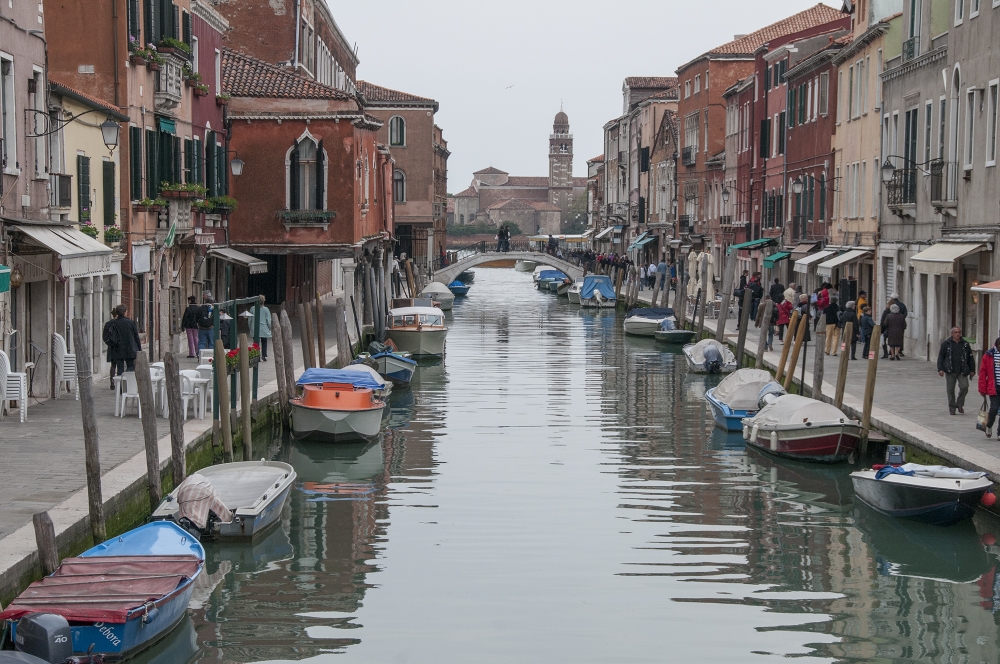

What are the absolute must-see experiences in Venice? From St. Mark’s Basilica and the Doge’s Palace to hidden neighborhoods, local food rituals, and lagoon sunsets, Venice offers far more than postcard views. This guide explores the essential landmarks and authentic moments that truly define the Serenissima.
Venice is not just a destination — it is an atmosphere. A floating city shaped by maritime power, artistic brilliance, and centuries of cultural exchange between East and West. Every façade reflects in water. Every narrow alley hides a story. Every church dome carries echoes of a powerful Republic that once ruled Mediterranean trade.
But Venice can also feel overwhelming. Crowds gather in the most famous squares, and it’s easy to miss the deeper rhythm of the city if you don’t know where to look.
This expanded guide combines iconic landmarks, local experiences, and practical travel insights to help you explore Venice in a meaningful, intelligent, and unforgettable way.
1. Climb St. Mark’s Bell Tower at Sunset
Why visit St. Mark’s Campanile? Because it offers the most spectacular panoramic view in Venice — especially at sunset, when the lagoon glows in gold and the city’s red rooftops reflect the last light of day.
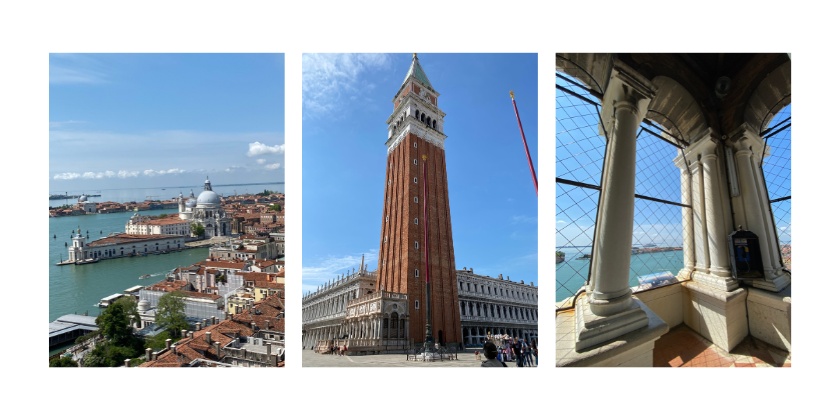
At nearly 100 meters tall, St. Mark’s Bell Tower (Campanile di San Marco) dominates the skyline of Venice. The structure you see today is a reconstruction — the original tower collapsed dramatically in 1902 and was rebuilt “as it was, where it was.”
Unlike many historic towers in Italy, the Campanile is accessible via elevator, making it one of the easiest panoramic viewpoints in Europe to reach. From the top, you’ll see:
- The domes of St. Mark’s Basilica from above
- The elegant façade of the Doge’s Palace
- The Grand Canal winding like a silver ribbon
- The lagoon stretching toward the Adriatic Sea
- On clear days, the distant Dolomites
But what makes this experience extraordinary is timing.
Sunset is the defining moment. As the light softens, Venice shifts from busy city to cinematic dreamscape. Church domes glow, boats leave gentle ripples, and the sky transforms into shades of amber and rose.
Practical Tips:
- Arrive at least 45 minutes before sunset in high season.
- Book online to skip ticket lines.
- Visit on weekdays if possible.
- Wind can be strong — bring a light jacket.
Standing above St. Mark’s Square as evening settles, you understand something essential: Venice was built not just for commerce, but for beauty.
This is not just a viewpoint. It is your first emotional connection to the city.
2. Visit St. Mark’s Basilica — The Golden Heart of Venice
Why is St. Mark’s Basilica one of the most important churches in Europe? Because it represents the political, religious, and artistic identity of Venice — and houses over 8,000 square meters of golden mosaics that shimmer like no other church in the world.
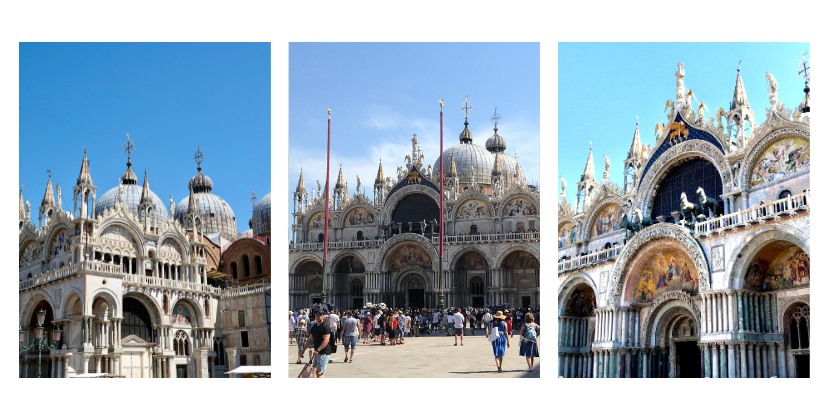
Originally built in the 9th century to house the relics of St. Mark the Evangelist, the basilica became a powerful symbol of the Venetian Republic. Unlike the sober Gothic cathedrals of Northern Europe, St. Mark’s Basilica reflects Byzantine influence — a reminder of Venice’s deep connection to Constantinople and the Eastern Mediterranean.
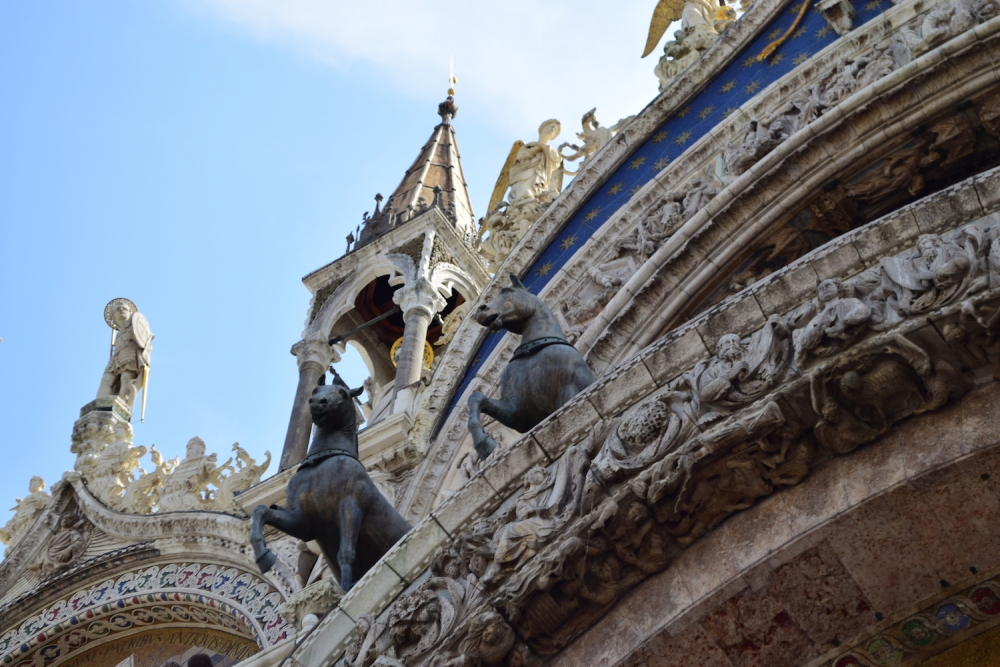
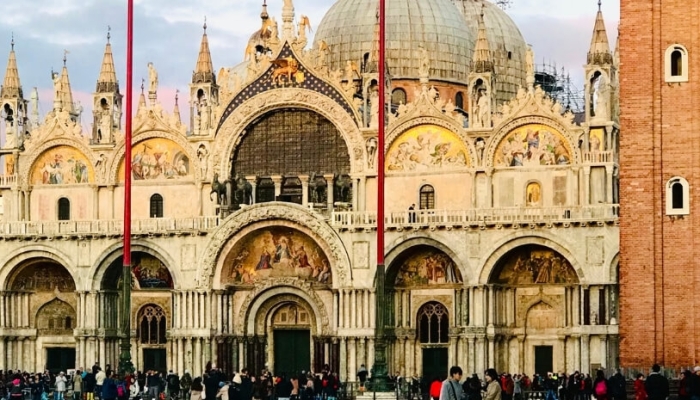
From the outside, the façade is almost theatrical. Marble columns taken from different parts of the Mediterranean. Decorative arches. Mosaics depicting biblical scenes and Venetian victories. The famous bronze horses — originally from Constantinople — stand proudly above the entrance.
Inside, the atmosphere is unlike any other church in Italy.
The golden mosaics cover ceilings and domes, reflecting light in soft, mystical tones. Walking through the basilica feels like entering a jewel box of sacred art. The floors, made of intricate marble patterns, undulate slightly due to centuries of settling foundations.
Among the highlights:
- The Pala d’Oro — a masterpiece of medieval goldsmith art, covered in precious stones.
- The Treasury — filled with relics and objects brought from Constantinople.
- The Terrace — offering one of the best views over St. Mark’s Square.
Insider Advice:
- Book skip-the-line tickets well in advance.
- Early morning visits are quieter.
- Dress modestly (shoulders and knees covered).
- Visit the terrace for both photography and perspective.
St. Mark’s Basilica is not just a monument — it is the spiritual and symbolic core of Venice.
When you step outside into the square again, you will see the city differently.
3. Explore the Doge’s Palace — Power, Politics and Secrets of the Venetian Republic
Why is the Doge’s Palace one of the most important landmarks in Venice? Because it was the political heart of one of the most powerful republics in European history — and remains one of the finest examples of Gothic architecture in the world.
.jpg)
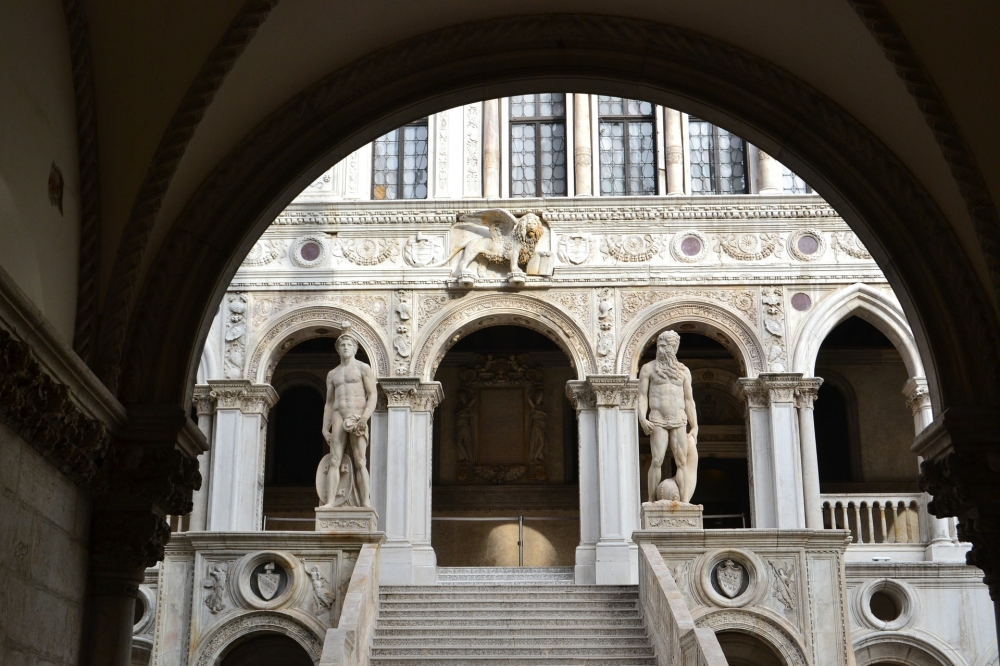
For over 1,000 years, Venice was not ruled by kings, but by a Doge — elected for life by a complex and remarkably modern political system. The Doge’s Palace (Palazzo Ducale) was not only the Doge’s residence but also the seat of government, courtrooms, administrative offices, and intelligence chambers.
From the outside, its pink Verona marble façade and delicate arches give an impression of elegance and lightness. But inside, the palace tells a story of strategy, diplomacy, justice, and maritime power.
Highlights include:
- The Sala del Maggior Consiglio — one of the largest rooms in Europe, decorated with Tintoretto’s monumental “Paradise.”
- The institutional chambers — where secret councils decided matters of war and trade.
- The Armory — showcasing weapons and military artifacts.
- The prisons — connected by the famous Bridge of Sighs.
Crossing the Bridge of Sighs is a powerful moment. Prisoners once glimpsed Venice for the last time through its small windows before entering the dark cells.
Insider tip: Choose a guided tour to understand how the Venetian Republic functioned. The government system was one of the most stable and innovative in medieval Europe.
Visiting the Doge’s Palace is not simply a tour — it is a journey into the intelligence, ambition, and complexity of Venice’s golden age.
4. Get Lost in Venice — Discover the City Beyond the Crowds
What is the best way to experience authentic Venice? Get lost.
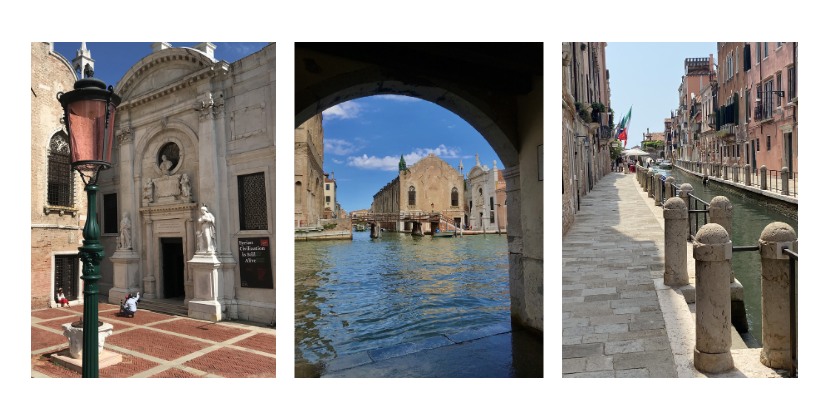
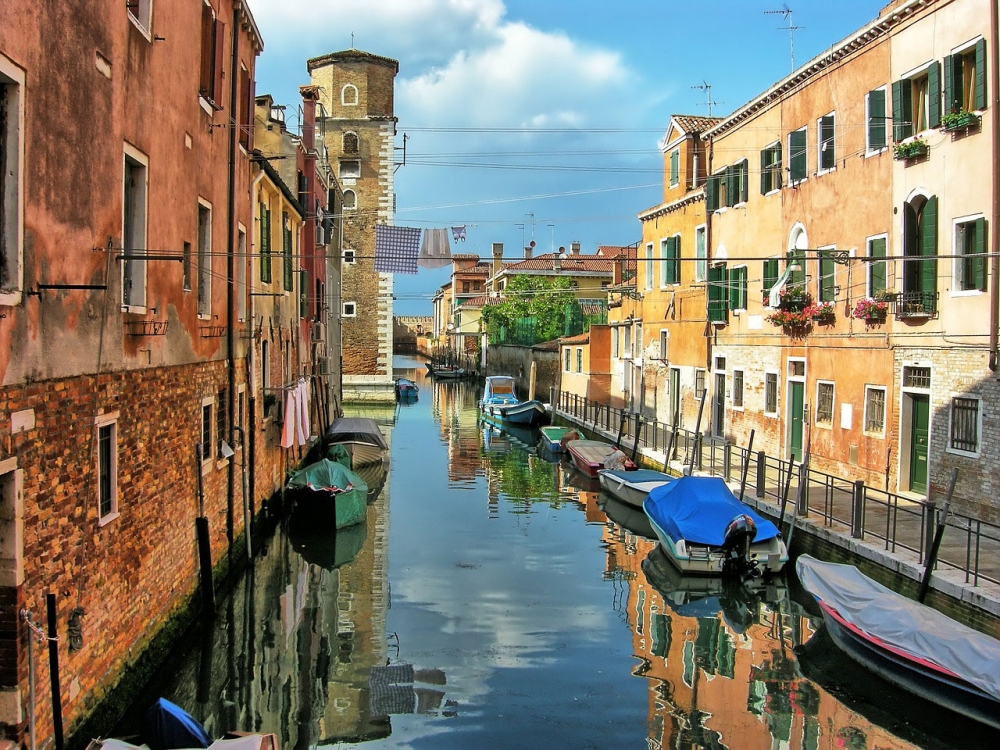
Beyond St. Mark’s Square and the Rialto Bridge lies a quieter Venice — one that unfolds through narrow calli, hidden courtyards, and silent canals where everyday life continues untouched by mass tourism.
Venice was designed as a labyrinth. Its streets do not follow a grid; instead, they twist organically, shaped by centuries of construction on water.
Wandering without a strict plan allows you to discover:
- Artisan workshops still producing handmade masks and glass.
- Small churches with Renaissance masterpieces.
- Local bakeries selling traditional pastries like bussolà.
- Residential neighborhoods where laundry hangs above canals.
Best districts for exploration:
- Dorsoduro — artistic and relaxed.
- Cannaregio — authentic and residential.
- Castello — peaceful and less touristy.
Venice rewards curiosity. When you step away from the main arteries, you begin to feel its rhythm — slower, intimate, and deeply atmospheric.
5. Enjoy a Spritz and Cicchetti in a Traditional Bacaro
What is the most authentic local experience in Venice? Sharing cicchetti in a bacaro with a glass of wine.
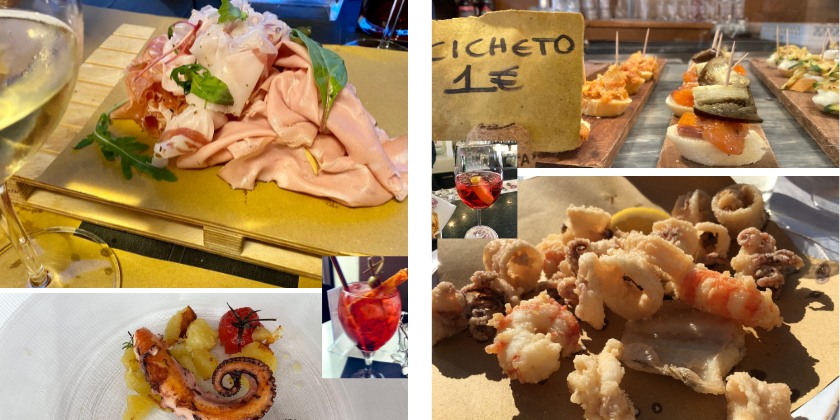
Bacari are small Venetian wine bars where locals gather for a quick drink and conversation. Instead of formal dining, you order small plates called cicchetti — Venice’s answer to tapas.
Typical cicchetti include:
- Baccalà mantecato (creamed cod on toasted bread)
- Sarde in saor (sweet and sour sardines)
- Polpette (meatballs)
- Fried seafood bites
Pair your snacks with:
- Ombra — a small glass of local wine.
- Spritz — the iconic Venetian aperitivo.
- Prosecco from the Veneto region.
Insider advice: Stand at the counter like locals do. Avoid overly touristy menus with photos.
This ritual is not about luxury — it’s about community. It connects you to everyday Venetian life.
6. Walk Along the Zattere — Venice’s Most Scenic Promenade
Where can you experience Venice without crowds and with open lagoon views? Along the Zattere promenade. Sestiere of Dorsosuro
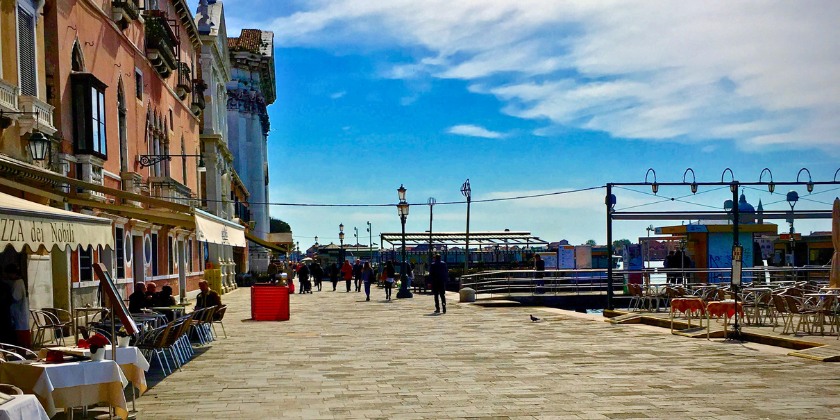
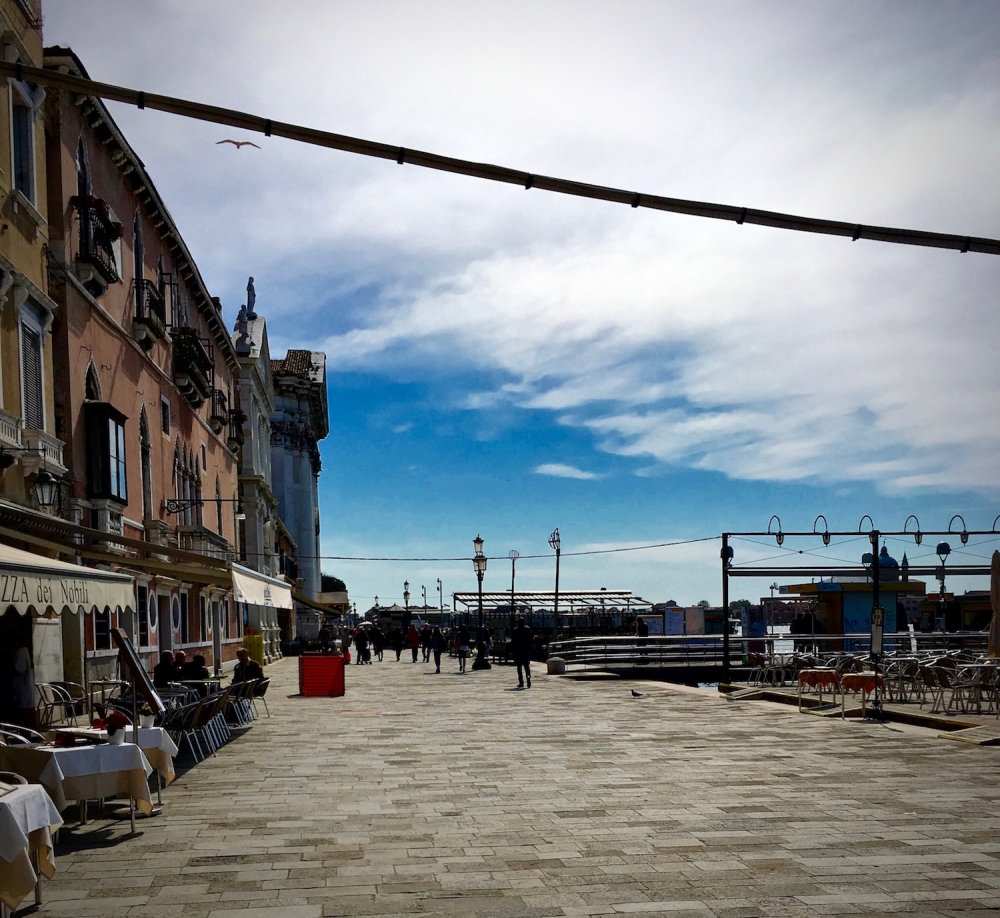
Facing the Giudecca Canal, the Zattere offers one of the widest and most open waterfront walks in Venice. Historically used as a docking area for timber rafts, today it is a peaceful escape from the busier central districts.
The atmosphere here is different. The lagoon feels vast. The breeze is stronger. The light is clearer.
Things to do along the Zattere:
- Enjoy gelato at sunset.
- Visit the Church of Santa Maria della Visitazione.
- Watch gondolas and boats crossing the canal.
- Simply sit and observe daily Venetian life.
Best time to visit: Late afternoon, when the sun begins to drop behind Giudecca Island.
The Zattere shows Venice in its most relaxed and authentic form — elegant, quiet, and deeply romantic.
7. Visit Teatro La Fenice — Venice’s Legendary Opera House
Why is Teatro La Fenice one of the most important cultural landmarks in Venice? Because it represents the city’s resilience, artistic brilliance, and centuries-long relationship with music, opera, and performance.
Teatro La Fenice — meaning “The Phoenix” — has risen from the ashes multiple times, most recently after a devastating fire in 1996. Rebuilt exactly as it was, the opera house today stands as one of Europe’s most elegant and acoustically refined theaters.
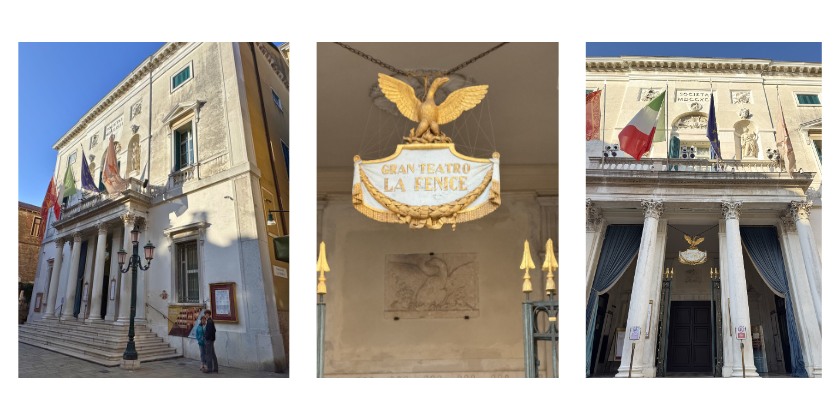
Since its inauguration in 1792, La Fenice has hosted world premieres of operas by Rossini, Verdi, and Bellini. It remains a living symbol of Venice’s artistic identity.
Inside, visitors are immediately struck by:
- The lavish gold and red interiors
- Intricate ceiling frescoes
- Crystal chandeliers and velvet balconies
- The intimate yet grand stage
You do not need to attend a full opera to appreciate its beauty. A daytime guided visit offers insight into its architecture, history, and reconstruction process.
Insider tip: If you can, attend an evening performance. Even a chamber concert or shorter recital allows you to experience the theater’s extraordinary acoustics and atmosphere.
La Fenice is more than a theater — it is a reminder that Venice has always been a city of culture, refinement, and artistic innovation.
8. Discover the Peggy Guggenheim Collection — Modern Art on the Grand Canal
What makes the Peggy Guggenheim Collection a must-visit in Venice? It offers one of Europe’s most important collections of modern art, set inside a former Venetian palace overlooking the Grand Canal.
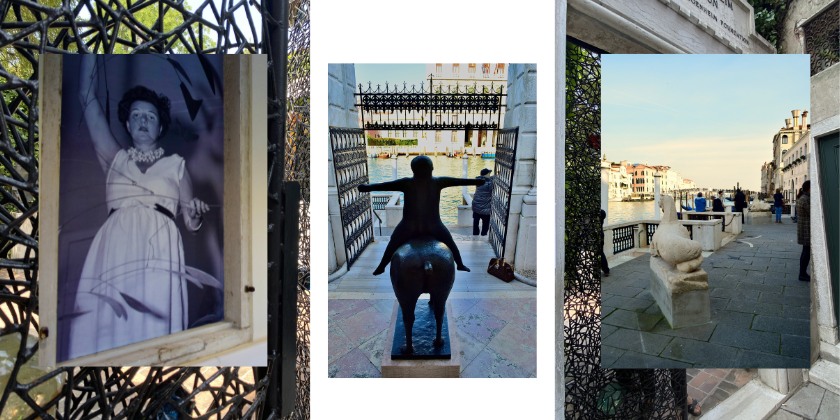
Housed in Peggy Guggenheim’s former home, Palazzo Venier dei Leoni, the museum reflects the personal taste and bold vision of one of the 20th century’s most influential art collectors.
The collection includes masterpieces by:
- Pablo Picasso
- Salvador Dalí
- Jackson Pollock
- Wassily Kandinsky
- Joan Miró
- Max Ernst
The sculpture garden offers a peaceful oasis, blending modern art with Venetian tranquility.
Visiting this museum provides a fascinating contrast to Venice’s Byzantine and Renaissance heritage, demonstrating that the city is not frozen in the past — it continues to inspire creativity.
Practical tip: Visit early in the morning or later in the afternoon for a quieter experience.
This stop adds a contemporary and intellectual layer to your Venice itinerary.
9. Visit Murano — Witness the Art of Glassmaking
Why is Murano famous worldwide? Because it has been the center of Venetian glassmaking since the 13th century — and continues to preserve techniques passed down through generations.
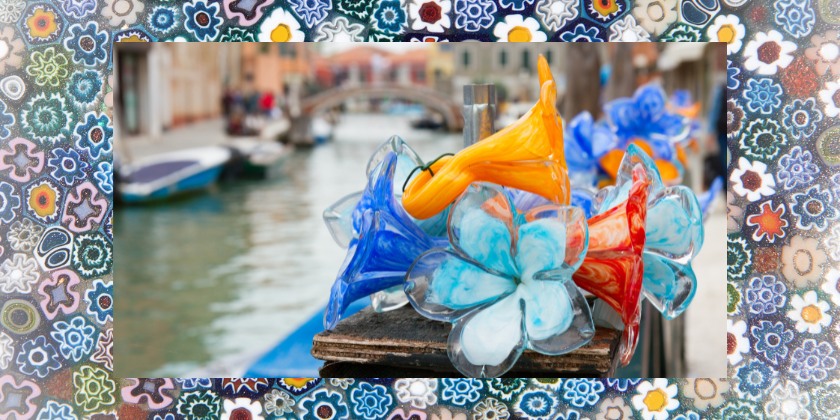
In 1291, glassmakers were moved from Venice to Murano to prevent fire hazards. Over time, the island became synonymous with luxury glass, exporting chandeliers, mirrors, and decorative objects throughout Europe.
Today, visitors can:
- Watch live glassblowing demonstrations
- Visit glass museums
- Explore artisan workshops
- Purchase authentic Murano creations
Insider advice: Avoid shops selling mass-produced souvenirs. Look for certified Murano glass with authenticity labels.
Murano reveals the craftsmanship and innovation that helped build Venice’s economic power.
10. Explore the Arsenale — The Engine of Venetian Power
Why was the Arsenale crucial to Venice’s dominance? Because it was once the most advanced shipbuilding complex in the world — capable of producing a fully equipped warship in a single day.
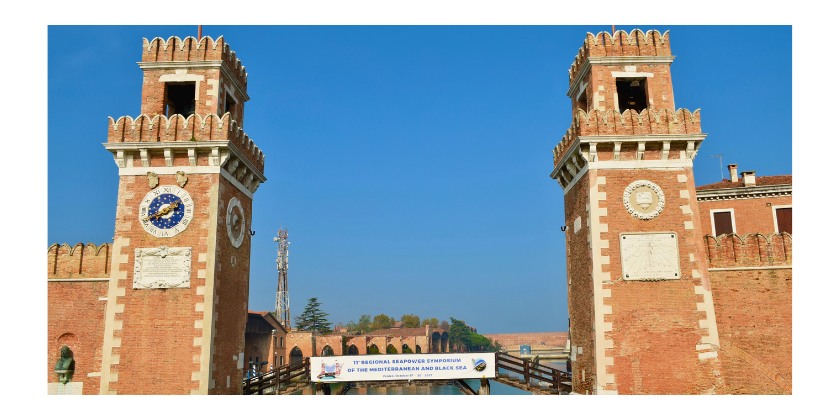
Founded in the 12th century, the Arsenale allowed Venice to control maritime trade routes and defend its territories. At its peak, it employed thousands of workers.
Today, parts of the Arsenale are open to visitors, especially during the Venice Biennale.
Walking through its massive gates and fortified walls provides a deeper understanding of Venice’s industrial strength and naval innovation.
This is Venice beyond romance — Venice as a global superpower.
Final Thoughts: Discover the Real Venice
Venice is layered. It is monumental yet intimate, crowded yet silent, historic yet alive. The true magic of the city lies in combining iconic landmarks with authentic moments.
Climb the Campanile at sunset. Admire golden mosaics. Get lost in quiet neighborhoods. Share cicchetti with locals. Walk along the lagoon. Explore art old and new. Step into theaters, shipyards, and island workshops.
Venice is not meant to be rushed.
Allow time to pause. To observe reflections in the canals. To notice architectural details. To hear footsteps echo through narrow streets at dusk.
If you approach Venice with curiosity and patience, the city reveals something extraordinary: not just beauty, but atmosphere — a sense of place unlike anywhere else in the world.
And that is what you should absolutely not miss.
THE BEST ACTIVITIES IN VENICE

.jpg)
- Walking Tour of Venice
- Doge's Palace Guided Tour
- The Ducal Venice Tour
- The Absolute Venice
- The Inside Venice Tour
- The Byzantine Venice and Gondola ride
- Morning Walking tour & Gondola Ride
- Basilica Guided Tour & Gondola ride
- The Islands Tour
- A Classic Gondola Ride Tour
- Gondola Serenade Tour
- Wine Tasting & Dinner
- The Byzantine Venice
- Classic Venice Private Tour
- Private Walking Tour
- Gondola and Walking Private Tour
- Gondola Serenade Private Tour
- Gondola and Dinner Private Tour
- The Legends of Venice
- Private Grand Canal Boat Tour
- Private Islands Tour
- Wine Tasting & Secrets of the Venetian Lagoon
- Private Luxury Cruise on the Grand Canal with Aperitif
- Wine & Cicchetti – Discover Venetian Food Traditions